


What’s inside the jar
One ingredient. Nothing added.
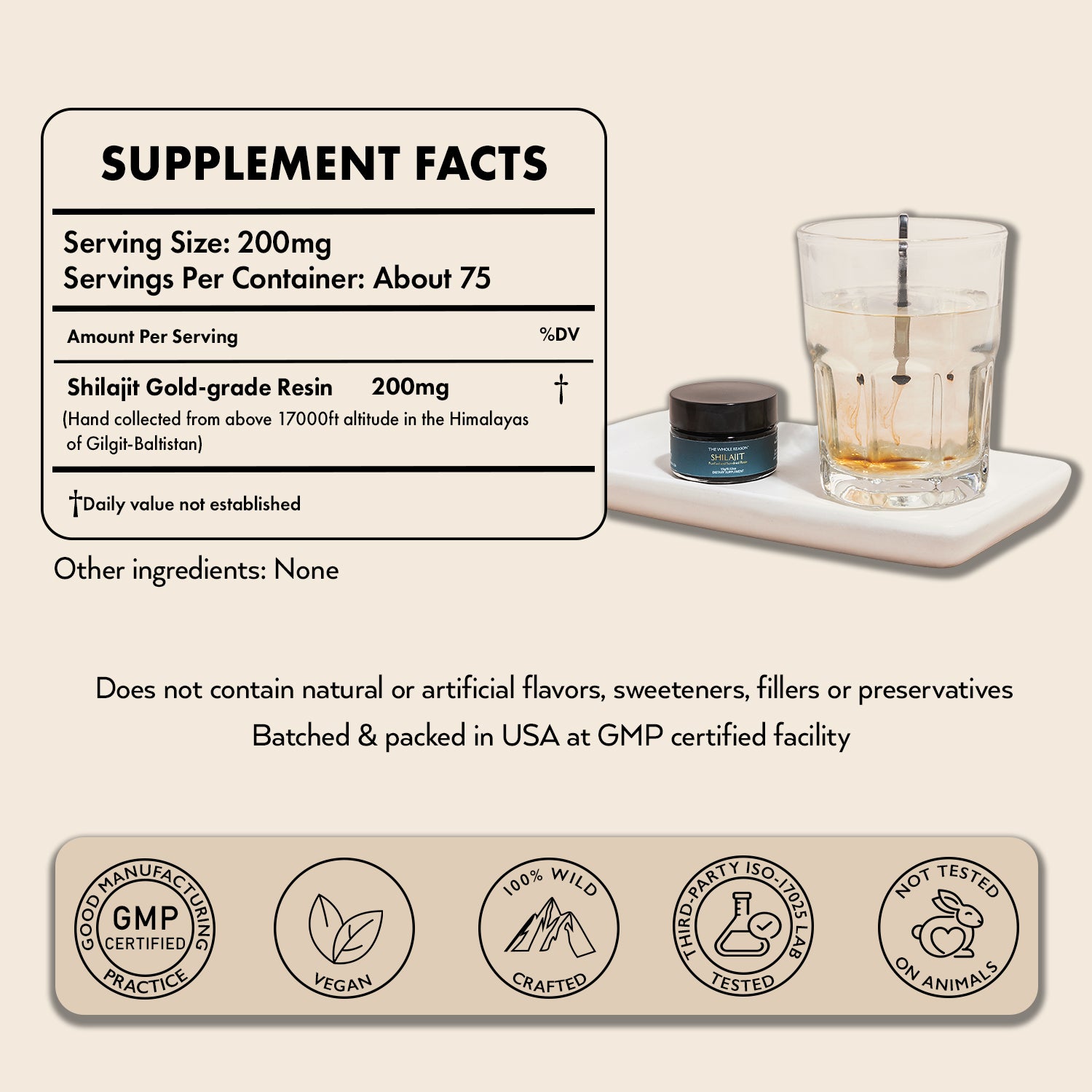
200mg per serving
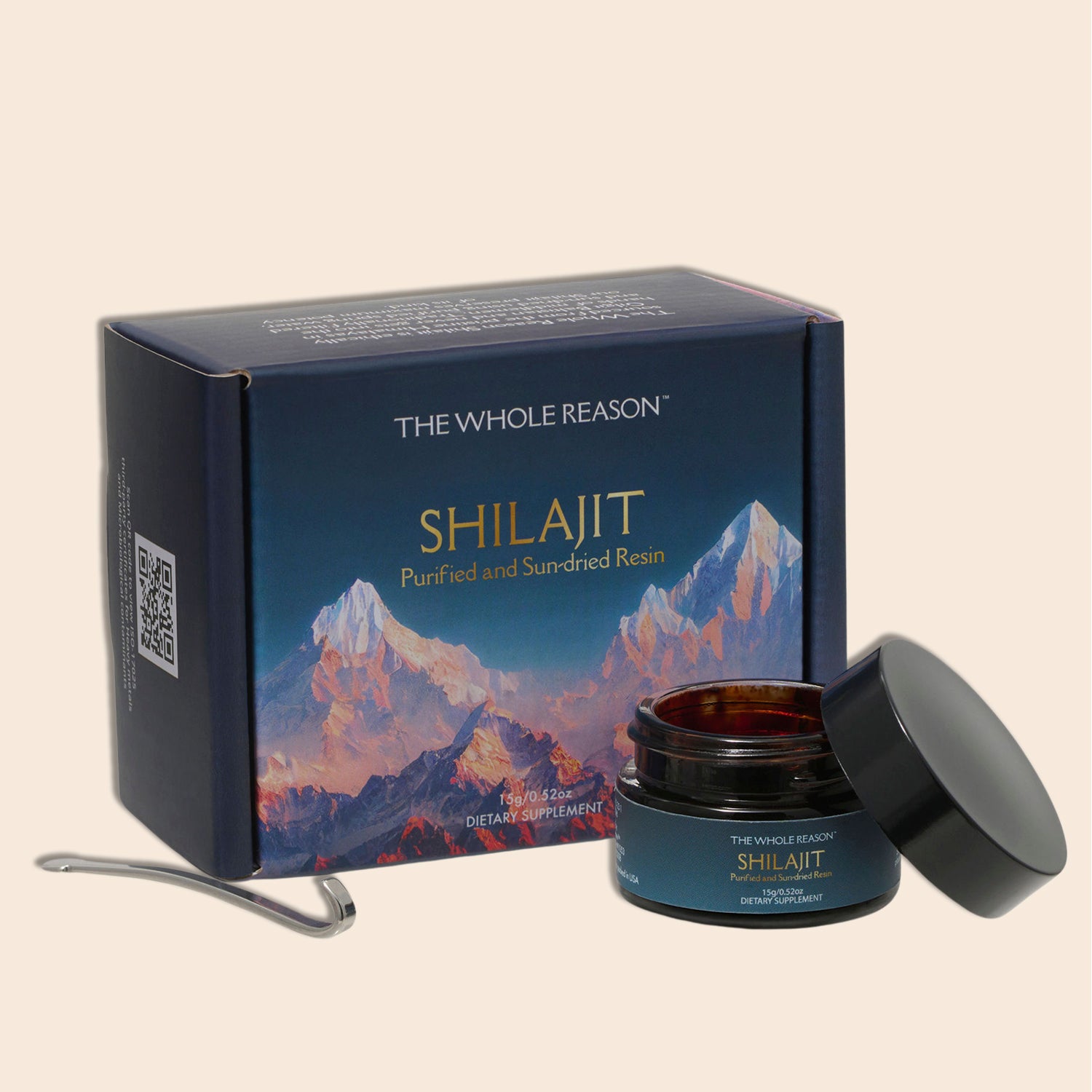
Purified Shilajit Resin
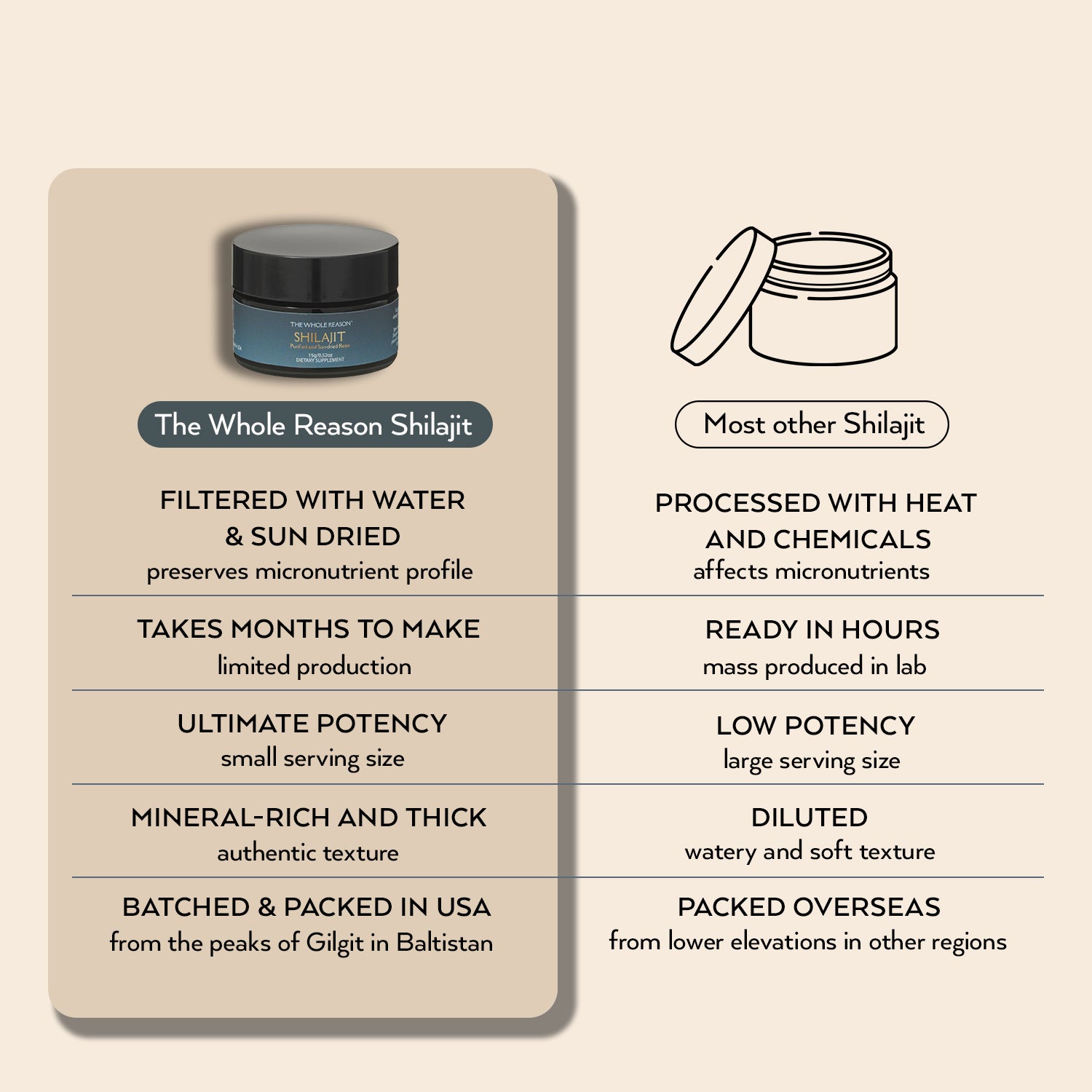
The sole active ingredient. Wild-harvested at 17,000+ ft in Gilgit Baltistan, Pakistan. Water-filtered and sun-dried — no heat, no solvents. The complete mineral matrix preserved exactly as nature made it.
Single ingredientNatural compound
Fulvic Acid
Naturally present in our Shilajit resin. Fulvic acid is studied for its role in transporting minerals into cells and supporting mineral bioavailability. We don’t claim a specific percentage — because accurate measurement is not scientifically standardised.
Key compound85+ types
Ionic Trace Minerals
Shilajit naturally contains a broad spectrum of ionic trace minerals — including magnesium, zinc, iron, copper, and selenium — shaped by millions of years of geological compression.
Full spectrumOther ingredients: None.
Third-party tested before every shipment
Heavy metals
Lead, mercury, cadmium, and arsenic screened before every batch ships.
Microbiological
Yeast, mold, E. coli, and salmonella screened before every batch ships.
Your daily ritual
How to use Shilajit Resin
1
Scoop a rice-grain amount
Use the included stainless steel spoon. A rice-grain-sized portion is approximately 200mg. Keep the spoon inside the jar while breaking away from the rest — this prevents sticky threads.
2
Add to warm liquid
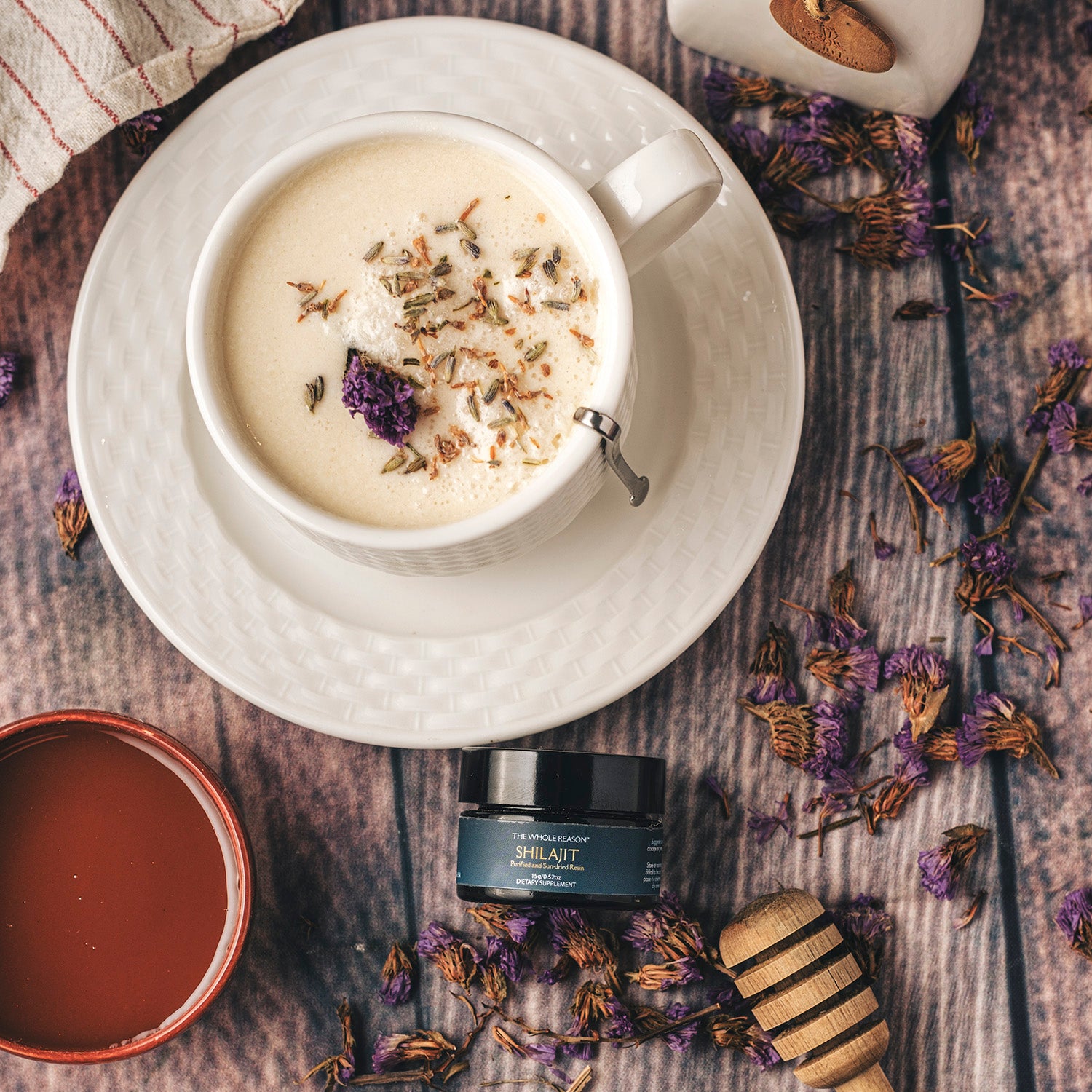
Dissolve in warm water, tea, or coffee. Shilajit melts readily in warm beverages.
3
Stir and drink
Stir gently until fully dissolved. Shilajit will color your drink a golden-brown. Best taken on an empty stomach or alongside your morning meal for optimal absorption.
4
Build your daily routine
Start with once daily and adjust as preferred.
Warm waterBlack coffeeMatchaHerbal teaGolden milkProtein shake
Serving information
Serving size: 200mg (approximately a rice-grain). Servings per jar: 75. Frequency: 1–3 times daily. One jar typically lasts 1 to 3 months depending on frequency.
From mountain to your shelf
We know exactly where this comes from.
1
Wild-harvested at the Himalayas
Collected from rock formations in Gilgit Baltistan, Pakistan. Single-origin, direct from our harvesters — no middlemen.
2
Water-filtered with mountain spring water
Purified using only high-altitude spring water. No chemical solvents, no heat — the full compound profile stays completely intact.
3
Naturally sun-dried
Dried at ambient temperature under the sun. No industrial high heat drying. Every fulvic acid molecule and ionic mineral preserved exactly as nature made it.
Commonly asked questions
FAQs
Shilajit formed as a result of slow decomposition and fermentation of plant matter that was trapped within the rocks of the Himalayas when the Indian plate and Eurasian plate collided some 50 million years ago. During summer months, the resin becomes thinner and seeps out of the cracks and crevices of the rocks. To learn more about the history of Shilajit, visit our journal.
Yes, The Whole Difference Shilajit is vegan.
Shilajit is a naturally occurring plant fossil that is trapped inside the rocks and took millions of years to produce under pristine conditions. As Shilajit is not an agricultural product and cannot be grown under a controlled environment, it may not be certified as organic unless it is processed to alter its chemical composition.
Our 15g jar typically lasts from 1 to 3 months depending on frequency of usage. One jar contains 75 servings of Shilajit assuming 200mg per single serving.
Shilajit is among the very few substances that can be tested for authenticity at home. Thanks to its distinct characteristics and well-known reactions to external stimuli, distinguishing genuine Shilajit is straightforward. Visit our journal for ways to test Shilajit at home.
Fulvic acid tests are not standardised and there is no established method for correctly measuring fulvic acid percentage, due to its unknown molecular weight and the fact that it cannot be separated from other components in Shilajit. Without separating the molecules, accurate measurement is not possible. If a test is performed regardless, results may vary from sample to sample as Shilajit is a natural substance. We do not claim a specific fulvic acid percentage.
Visit our journal for in-depth considerations when buying Shilajit.
It is natural for genuine Shilajit to become hard when exposed to temperatures below 80°F. Place it in a warmer area and let it soften. If the lid is stuck, place it under warm running water for a few minutes.
Shilajit can become hard when it loses moisture — this can happen over time if the lid is not tightly closed. Simply add a few drops of warm purified water and let it sit for a few hours. The water will dissolve seamlessly, restoring moisture and a thinner consistency to the resin.